
Navigating Freelance Crew Kit Fees: A Producer Guide
Learn how to structure and budget for equipment fees without alienating talent or breaking your production budget.
The Reality of the Kit Fee
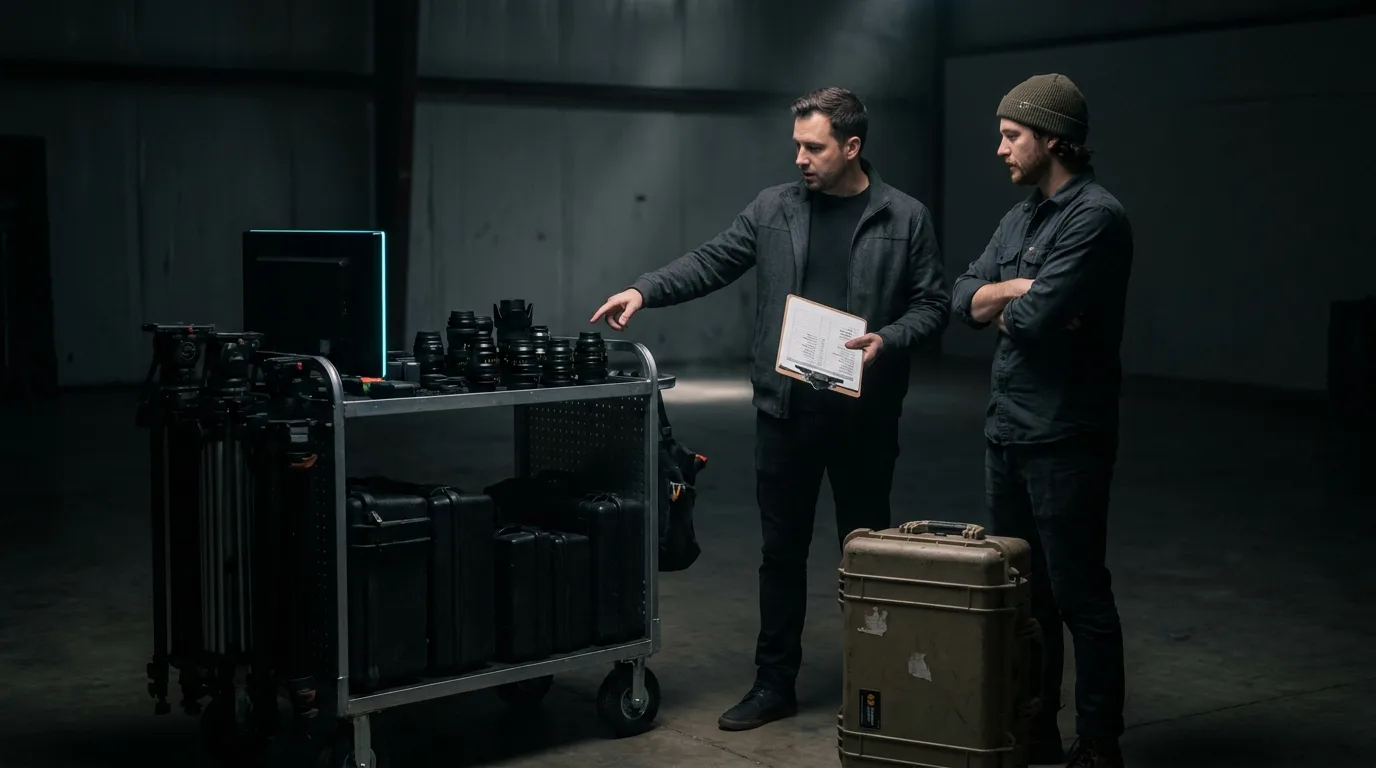
In professional production, you are paying for two distinct commodities: the operator and the tool. The confusion often arises when producers compare a freelance DP or lighting tech to a general laborer. A plumber does not typically ask a homeowner to provide a high-end pipe-fitting suite, but a producer absolutely requires a specific camera sensor or a precise lighting package to hit the look of a project.
To Bundle or To Itemize
You have two primary ways to present costs to a client: a flat all-in day rate or a transparent line-item structure. Both have merits depending on your project type.
The All-In Approach
Bundling equipment costs into a flat day rate keeps your bid clean and simple for the end client. If you are hiring a lighting tech, you might simply quote a daily fee that includes their basic kit. This avoids sticker shock, but it lacks flexibility. If the shoot scope shifts, you may find yourself absorbing costs when you need to upgrade from a basic two-light kit to a full grip and electric build.
The Itemized Approach
Itemizing crew time from gear packages provides clarity for everyone. It signals that you value the technician's expertise separately from the capital investment they have made in their equipment. At IceQuake Studios, our gear packages range from a Basic Lighting Kit at +$200 to a full Cinema Kit at +$1200. Keeping these distinct allows you to scale production value up or down as the budget evolves without renegotiating the technician's actual labor rate.
Best Practices for Budgeting
- Set expectations early: Discuss gear requirements during pre-production. If your project demands specialized tools, build a budget for rental or kit fees before you finalize your talent lineup.
- Respect the depreciation: Remember that gear is a depreciating asset. A crew member charging for their equipment is covering maintenance, insurance, and the eventual replacement cost of the tech they bring to your set.
- Use industry standards: Referencing standard market rates helps keep your bids competitive. Whether you are budgeting for a Production Assistant at $75/hr or a Director of Photography at $200/hr, ensure your equipment line items remain fair and separate.
If you are struggling to balance your crew requirements with your budget, professional support can help streamline your approach. From pre-production planning to on-set staffing, we provide the resources you need to keep your production on track. Book a free Production Support Call to discuss your upcoming project requirements.
Get Production Support for Your Next Shoot
Second shooters, lighting techs, and production crew across Houston, Dallas, Austin, and San Antonio.